Creative Practice Blog - 1 - HUM 6354 | Arts in Medicine Advanced Professional Seminar

The Photograph I Chose Not to Take

An Exploration of Ethics, Patient Dignity, and Art in Healthcare

When I began thinking about ethics in art and healing, my thoughts immediately turned to photographing patients. This is something I feel strongly about, both as someone who has experienced a lengthy hospitalization and as an Art Practitioner who now spends time with patients during some of their most vulnerable moments.

In healthcare, photographs are often used to document experiences, share inspiring stories, promote programs, or celebrate recovery. While these images may be taken with good intentions, I often wonder whether we truly consider how the patient might feel about them later. Just because someone agrees to be photographed in a particular moment, does that mean they will always be comfortable with that image being seen?

During my own hospitalization, there were days when simply sitting up, smiling, or feeling slightly better than the day before seemed like a tremendous accomplishment. I understand how someone could agree to a photograph during one of those moments. They might feel hopeful, grateful, or excited about their progress. But weeks, months, or even years later, that same photograph might represent a time they would rather not have displayed for the world to see.

I am not ashamed of what I experienced as a patient. Those experiences are part of my story. However, I do not want to be remembered only as the person lying in a hospital bed, struggling to survive. I want people to see me as I am today: healthy, strong, creative, and so much more than my medical history.

This personal perspective became the foundation of my exploration of ethics through art.


The First Idea: Blurring the Patient

My initial concept involved creating photographs of patients with their images blurred or obscured. My thought was that I could still communicate the experience of being present with someone during a difficult time while protecting their identity.

At first, this seemed like a reasonable solution. After all, if a patient's face could not be recognized, perhaps their privacy would be protected.

However, as I continued thinking about this approach, I began questioning whether blurring someone's identity was enough. Even without a recognizable face, the patient's body, surroundings, medical equipment, or circumstances might reveal something personal. More importantly, the photograph would still capture someone during a moment of vulnerability.

I began asking myself whether protecting someone's identity was the same as protecting their dignity. I realized that the two are not necessarily interchangeable.
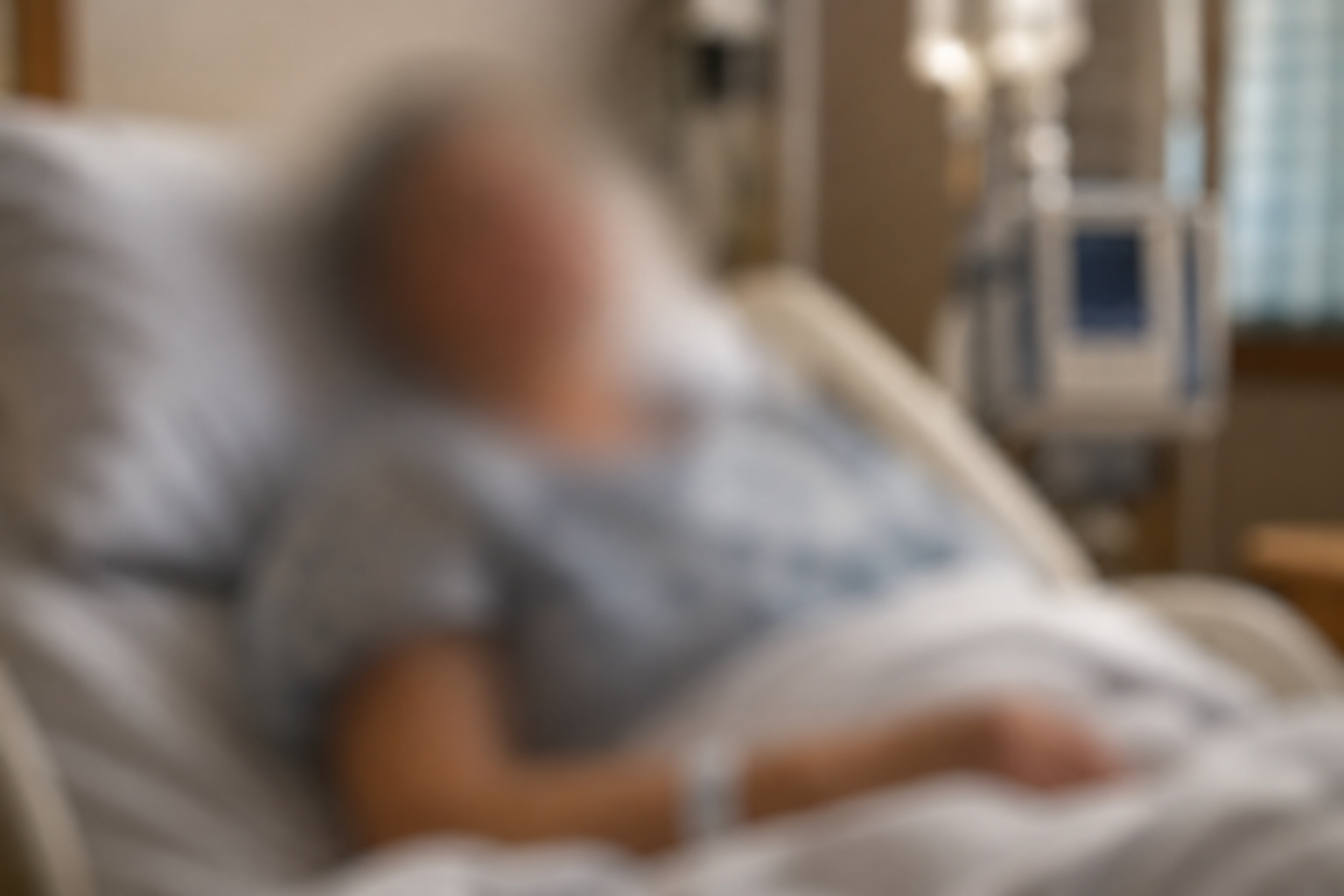

[Progression Image 1: Concept exploring a blurred or obscured patient photograph]


The Second Idea: Putting Myself in the Photograph

My next idea was to remove the patient from the photograph entirely and instead take pictures of myself while sitting with patients. I imagined something similar to taking selfies during these interactions, with the titles identifying the circumstances surrounding the patients I was visiting.

I thought this approach might allow me to acknowledge the experiences without showing the individuals themselves.

But as I explored the idea, another ethical concern emerged. If I placed myself in the photograph while referencing someone else's illness, trauma, or recovery, whose story would I actually be telling?

Would I be documenting a meaningful encounter, or would I be turning another person's vulnerable experience into something centered around me?

As an Art Practitioner, I am invited into moments that are deeply personal. Patients allow me to share a small part of their experiences, but that does not make their stories mine to claim or display.

I began to recognize that even when a patient is physically absent from a photograph, their circumstances can still be used to give that photograph meaning. Removing the patient from the image did not necessarily remove the ethical dilemma.
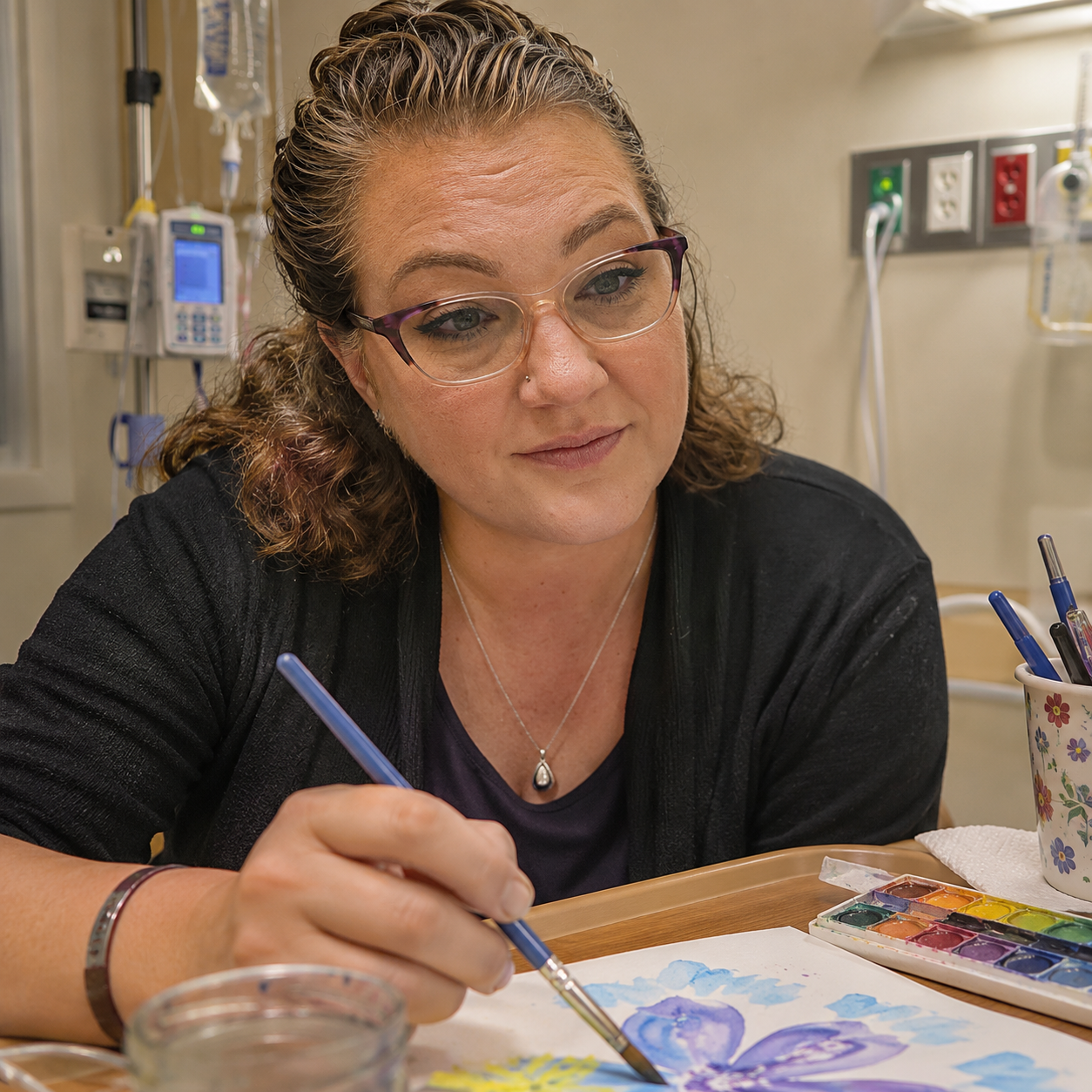

[Progression Image 2: Self-portrait concept representing time spent with a patient without showing the patient]


The Third Idea: Blacking Out the Image

From there, I began considering completely black canvases. I imagined a series of photographs that had been entirely blacked out, leaving nothing visible to the viewer.

This seemed like a stronger way to protect the individuals. The viewer would know that something had been photographed, but they would have no access to the image itself.

The black surfaces could represent privacy, protection, and the deliberate withholding of information.

Yet something about this concept continued to bother me.

A blacked-out image still suggests that a photograph was taken. Even if the image is concealed, the moment has already been captured. The decision about whether that moment should exist as a photograph has already been made.

I started thinking about the difference between taking a photograph and deciding not to share it versus choosing not to take the photograph at all.

This became an important turning point in my creative process. I realized that I was still trying to find ways to make an image acceptable rather than questioning whether the image needed to exist.
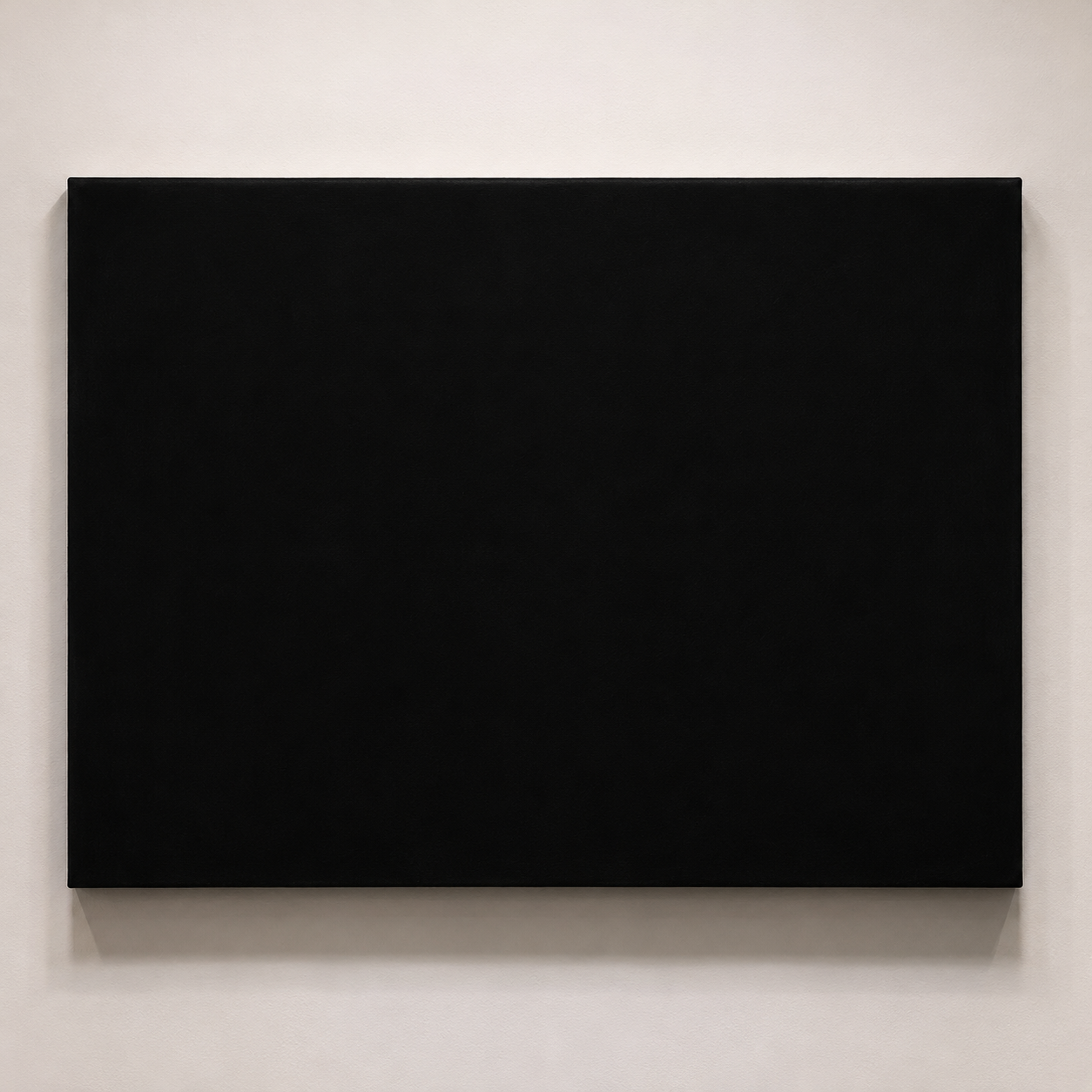

[Progression Image 3: Black canvas representing a photograph that has been completely concealed]


The Final Idea: The Empty Frames

Eventually, I arrived at the idea of five empty picture frames hanging on a wall.

Each frame would have a small title describing a different patient experience:

  • Cancer Patient, 3 Months Into Chemotherapy

  • Sepsis Patient, 1 Week After Waking Up

  • Trauma Survivor, 2 Days After ICU Transfer

  • Post-Surgical Patient, Learning to Walk Again

  • Chronic Illness Patient, During a Pain Flare

There would be no photographs inside the frames. No blurred faces, no carefully cropped images, and no blacked-out canvases.

The frames would simply be empty because the photographs were never taken.

For me, this became the most meaningful solution.

Each title encourages viewers to imagine the circumstances of the person who might have appeared in that frame. Perhaps they are exhausted, frightened, in pain, or celebrating a small victory in their recovery. The viewer can imagine these experiences, but they are not given access to the person's actual image.

The absence becomes intentional.

Rather than displaying someone during one of the most vulnerable moments of their life, I am choosing to acknowledge that experience without exposing the individual.

I also find it interesting that an empty picture frame creates an expectation. When we see a frame on a wall, we naturally expect something to be inside it. By leaving the space empty, I am interrupting that expectation and asking viewers to think about why they believe they should be able to see something there.

The work is no longer about finding a way to photograph patients ethically. It is about recognizing that sometimes the most respectful decision is not to take the photograph in the first place.
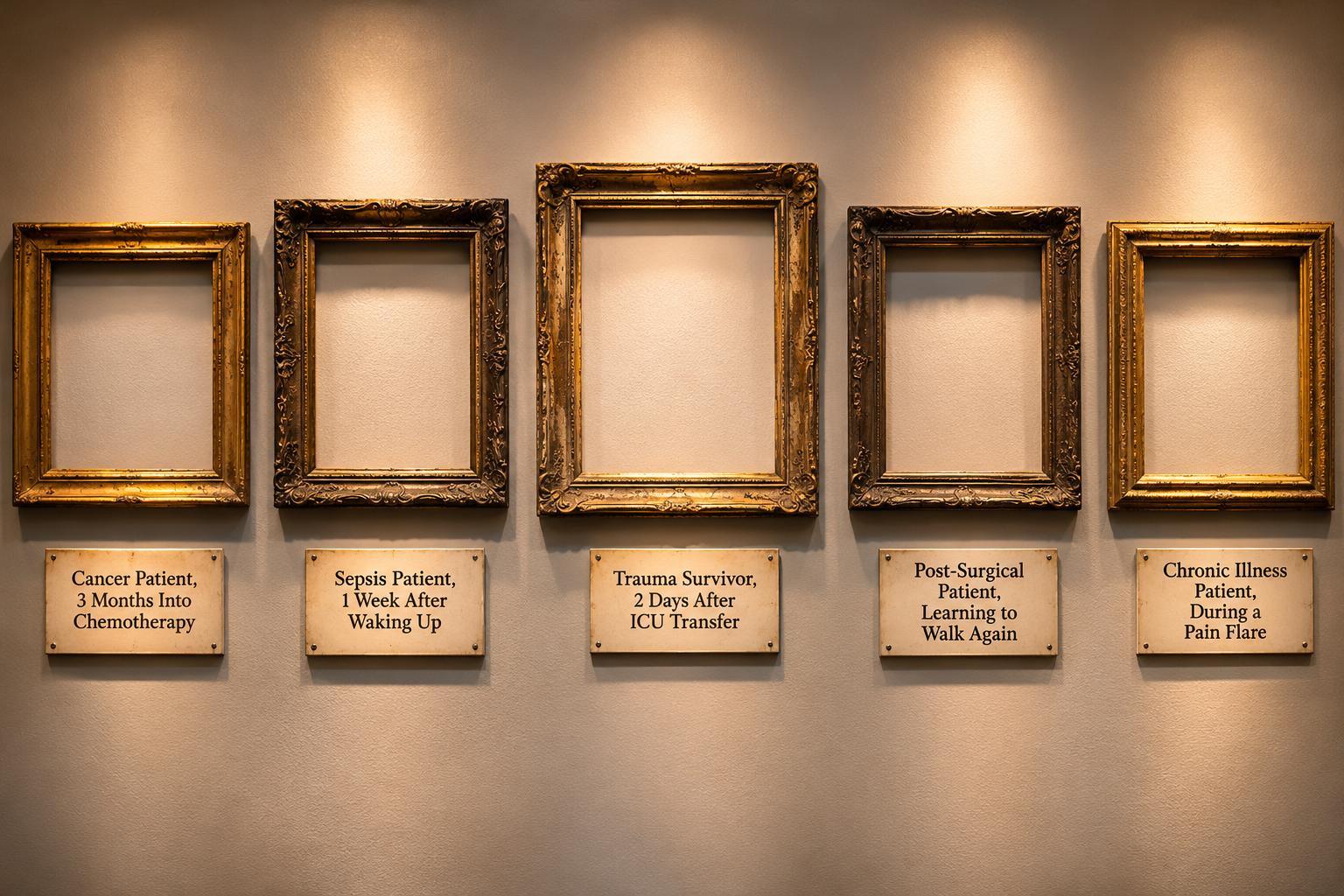

[Progression Image 4: Final concept showing five empty frames with titles identifying different patient experiences]


If I Were to Take This Further: The Gallery Experience

If I were to expand this project beyond the initial artwork, I would love to create a gallery installation using either empty picture frames or mirrors.

The empty frames would continue to represent photographs that were never taken. Visitors would walk along the gallery wall reading the titles beneath each frame, imagining the experiences of the patients who might otherwise have been displayed.

The empty space would leave the viewer's mind focused on the image that does not exist. It would encourage reflection about dignity, vulnerability, and the boundaries of what we choose to document.

However, I think replacing the empty frames with mirrors could create an entirely different and perhaps more confronting experience.

Imagine walking through a gallery and approaching a frame labeled "Cancer Patient, 3 Months Into Chemotherapy." Instead of seeing a photograph of someone else, you see yourself.

Suddenly, you are the person in the frame.

You move to the next mirror, labeled "Sepsis Patient, 1 Week After Waking Up," and once again, you see your own reflection.

The viewer is no longer simply imagining someone else's experience. They are being asked to put themselves in that person's place.

Would they want their photograph hanging on that wall? Would they want strangers looking at them during an incredibly difficult moment? Would they feel comfortable knowing that their experience had become something for other people to observe, discuss, or interpret?

And perhaps most importantly, would they still feel the same way about photographing patients if they were the patient being photographed?

I find this idea compelling because it changes the viewer's role. With the empty frames, the audience is asked to consider the person whose photograph was never taken. With the mirrors, the audience becomes the person who might have been photographed.

The experience moves from observation to personal confrontation.

I could even imagine combining the two approaches in one installation. Visitors might first encounter a series of empty frames before reaching a final frame containing a mirror. That final frame could be titled "You, On the Day You Never Wanted Anyone to Remember."

I think this could create a meaningful moment of reflection. We often view photographs of patients from a comfortable distance, knowing that the illness or trauma belongs to someone else. A mirror removes that distance and asks us to consider how we would feel if our own vulnerability were placed on display.

The empty frames and mirrors would communicate the same ethical concern through two different experiences. The empty frame asks viewers to consider the photograph that was never taken. The mirror asks whether they would want that photograph taken of themselves.
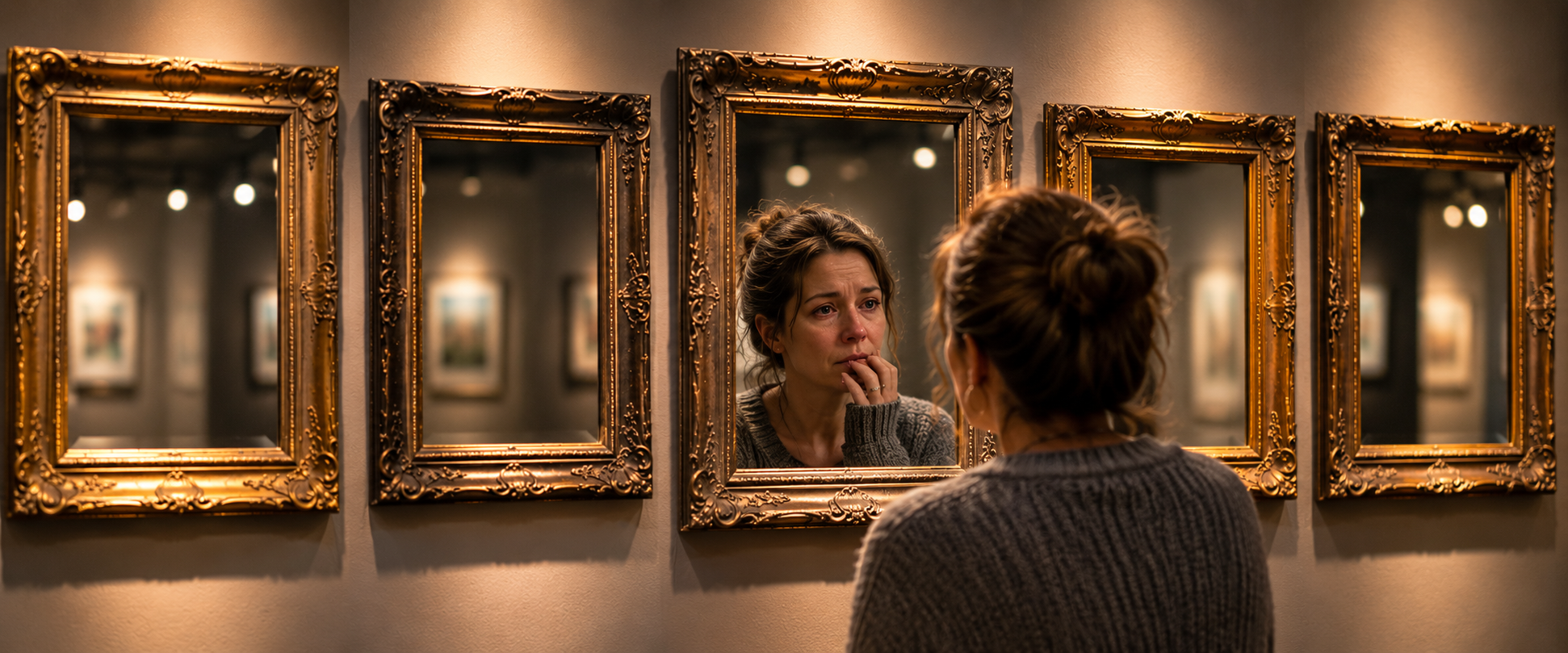

AI generated. This is an rendering of a concept.

Final Reflection: Ethics Beyond Consent

As I look back at the progression of this project, I find it interesting how much my thinking changed. I began by trying to find a way to photograph patients without revealing their identities. I moved through ideas that obscured, redirected, and concealed the image. Eventually, I realized that the most meaningful artistic decision was to eliminate the photograph entirely.

The process made me consider the difference between what we are permitted to do and what we should choose to do.

I recognize that patients have the right to make decisions about their own images. Meaningful, informed consent is essential, and some individuals may genuinely want to share their photographs as part of their healing or advocacy. My concern is not that every patient photograph is automatically unethical. It is that consent should not be treated as the end of our ethical responsibility.

As healthcare professionals, artists, and caregivers, we must think beyond the immediate moment. We should consider whether the image is necessary, who benefits from it, how it may be used, and how the person might feel about it in the future.

My own experiences have made me particularly sensitive to this issue. I know what it feels like to be incredibly vulnerable and to celebrate small moments of improvement. I also know how differently those moments can feel when viewed from the perspective of recovery.

When I spend time with patients, I recognize that I have been invited into a part of their lives that may be difficult, frightening, or deeply personal. I consider that invitation a privilege, and I believe it comes with a responsibility to protect their dignity.

This project has reinforced my belief that art does not always need to reveal something to communicate something meaningful. Sometimes absence, restraint, and the decision not to show an image can create a stronger statement than the image itself.

The empty frames are not empty because there is no story to tell. They are empty because the person who lived that story deserves to decide how, when, and whether it is seen.

Sometimes the most ethical image is the one we choose not to take.
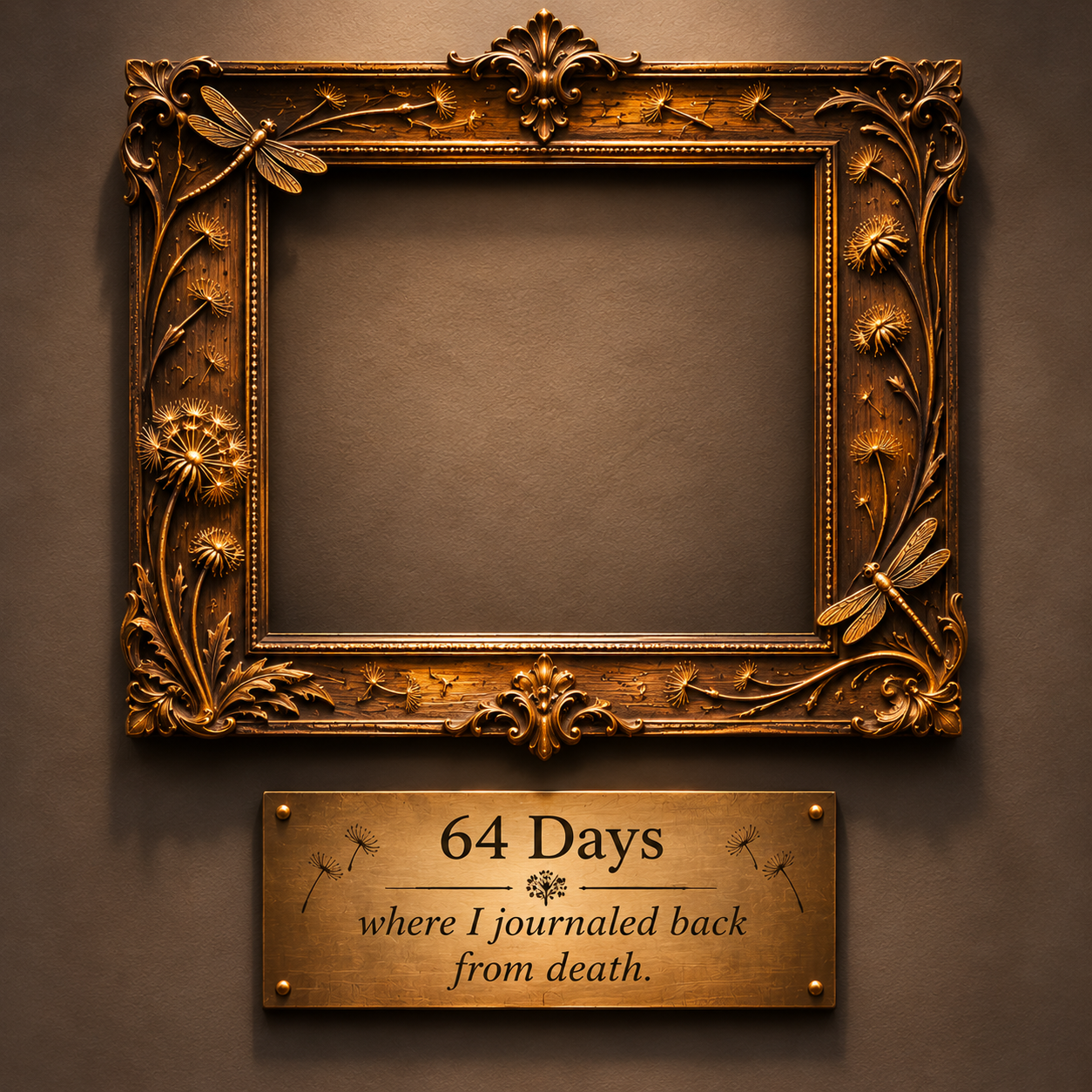
Example of frame that representative of my story. Dragonflies and Dandelions represent my journey and how I worked everyday to leave the hospital.

-The frame becomes the portrait of the patient. The imagery carved into the wood shows the patients self portrait.
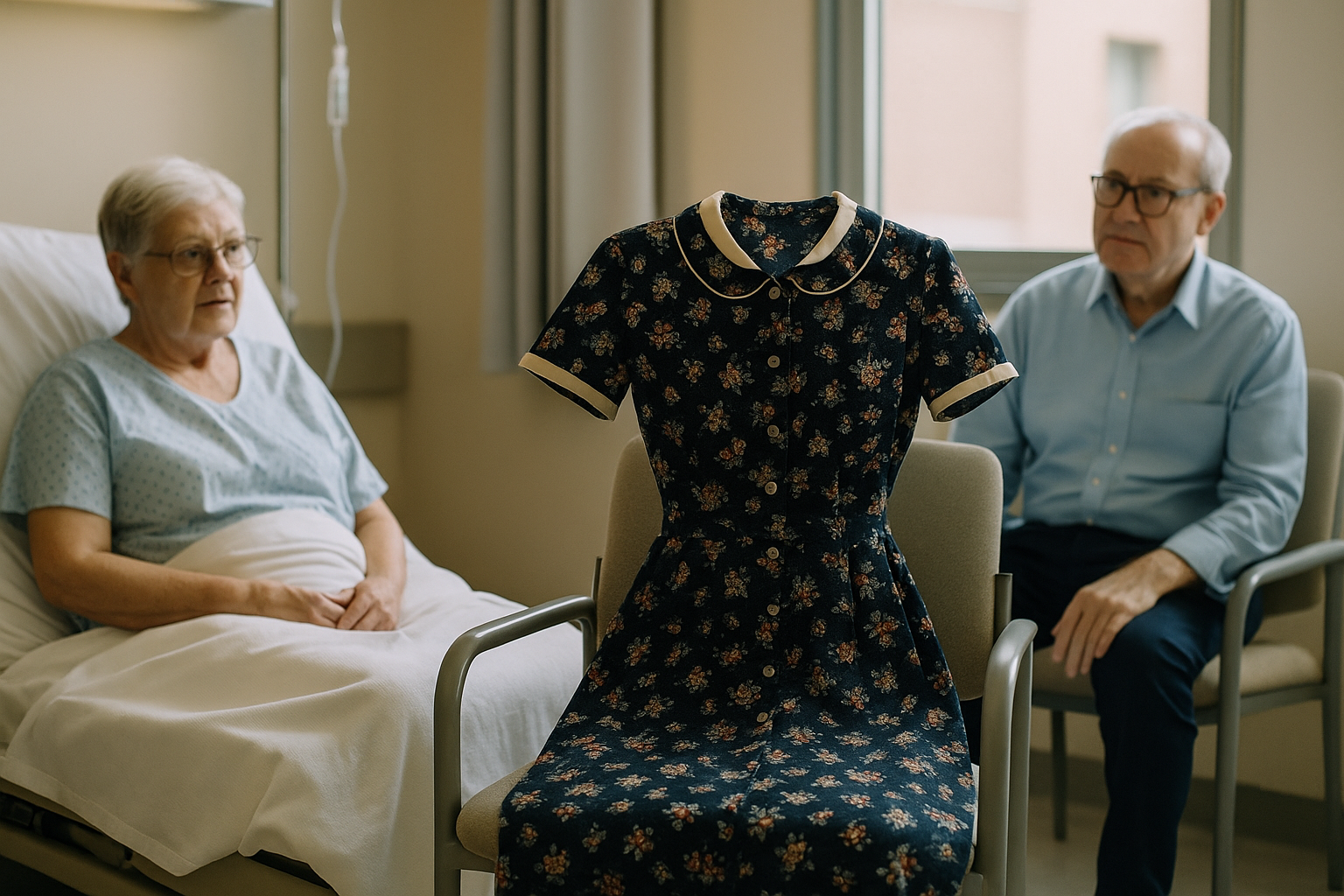
The Dress That Makes Me Seen - Creative Process 1-HUM6967


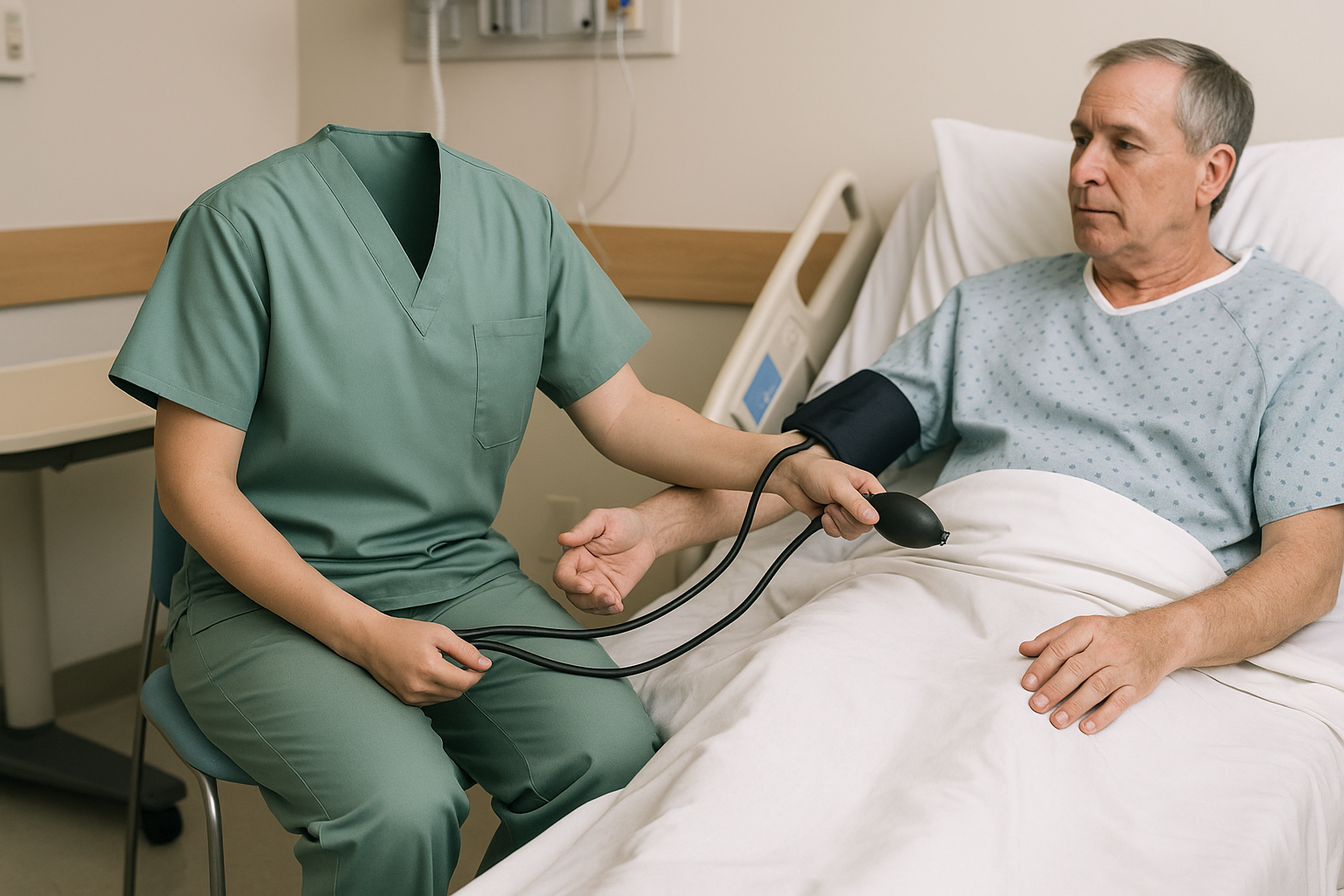
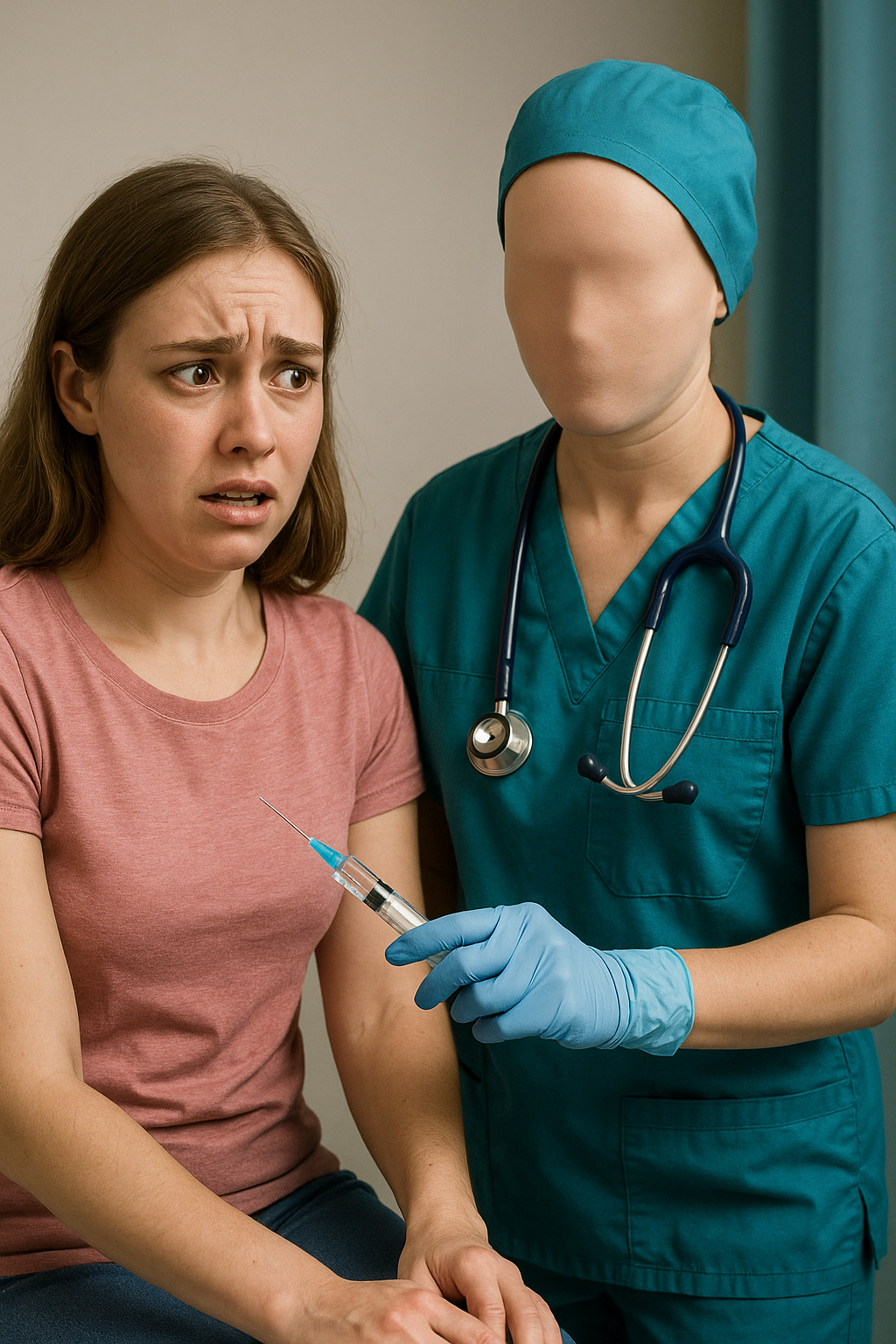
For this creative practice, I began with a simple concept: How does my clothing actually function in the hospital? I have long noticed that when I wear business casual, my patients turn me down more often. When I wear my dresses, the response shifts. So I started by creating the first image through AI as I wanted to create a series of pictures that gave a clearer picture of what patients see. I started wit my dress in a patient room — hoping to see what my patients see. At first, it didn’t offer much clarity. It felt still, almost neutral.

But as I continued generating images, placing faceless “figures” in different roles — a surgeon, a nurse, an administrator — the project changed. The more I removed the human features and left only uniforms, the more I found myself slipping into an unexpected role: the patient. Suddenly, I wasn’t creating scenes — I was inside them. I felt that rising panic of trying to understand who was caring for me based solely on clothing and posture. There were no people, only categories.

This was the moment of introspection that shifted everything. I realized: my patients often see the same thing. They interpret roles, not individuals, because the uniform speaks before the person can.

Seeing my own dress among these faceless clinical figures made its role startlingly clear. My clothing interrupts the hierarchy. It softens the environment. It signals that I am not a threat — that I am something familiar, warm, and human.

Through this process, I learned that my clothing is not just part of my identity. It is part of the communication that shapes how patients experience safety, trust, and care.


Creative Practice Blog 2: Tree of Life or Dandelion of Life

First I looked at the prompt and rearanged the headings:

Artist Reflection

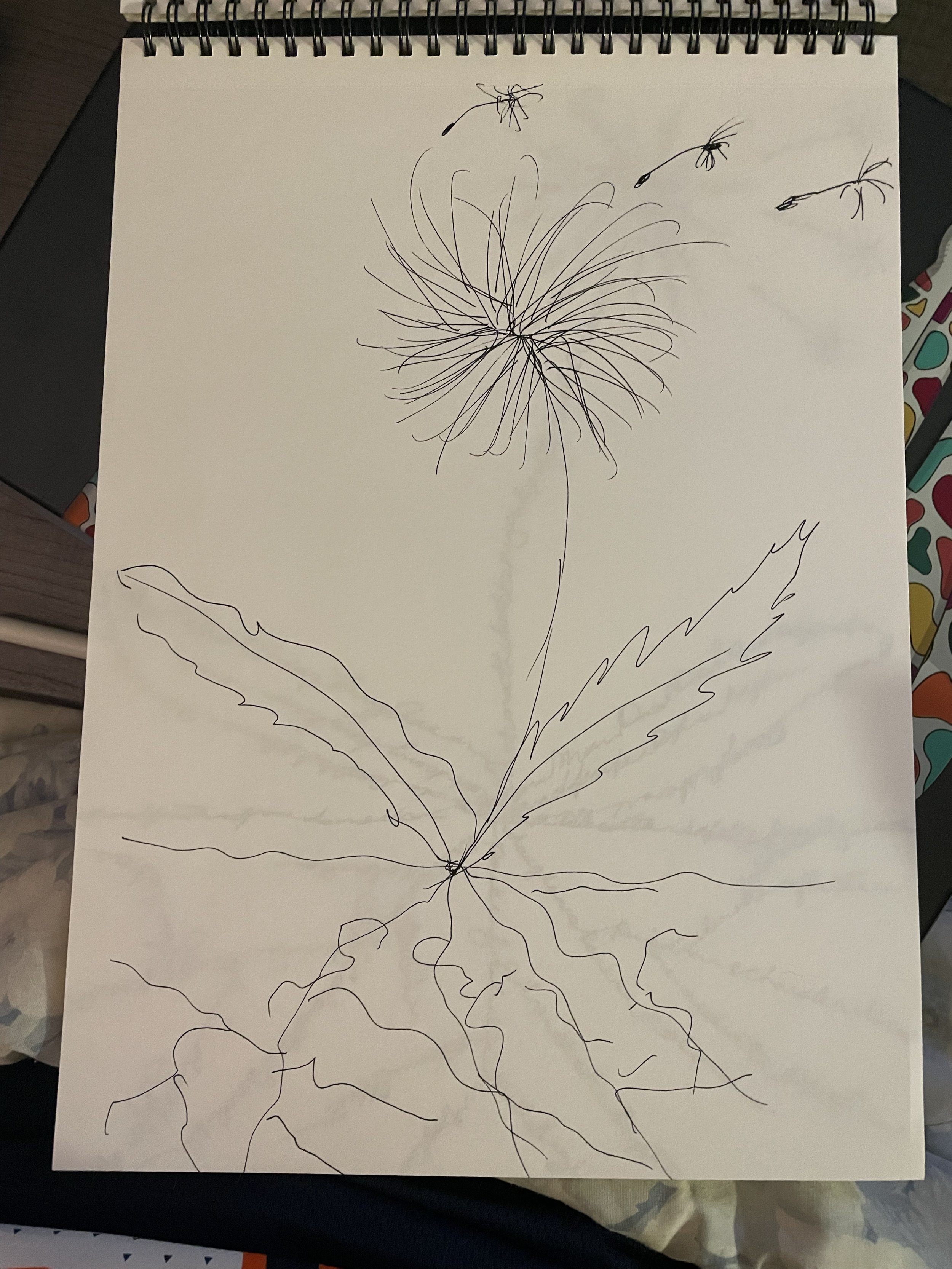
I looked at the original headings and rearranged them into something that felt more authentic to me. A dandelion is more fitting than a tree — it represents growth, resilience, and movement. Every part of a dandelion has purpose, and nothing is wasted. The roots, leaves, bloom, and seeds all work together to create beauty and continuation.

For me, the Dandelion of Life symbolizes wholeness. I don’t believe in discarding parts of myself or my past. Every experience — good or hard — becomes part of the soil that shapes who I am. Like a dandelion, I take what life gives me, turn toward the light, and let the wind carry my ideas, care, and creativity wherever they might land.

🌼 The Dandelion of Life

Every part of the dandelion has a purpose. Nothing is wasted; everything contributes to growth. Its roots reach deep, its leaves nourish, its bloom brightens the world, and its seeds carry hope into new places.
This dandelion represents my life — the people, places, and lessons that have shaped me, and the legacies I hope will continue to grow long after I’m gone.

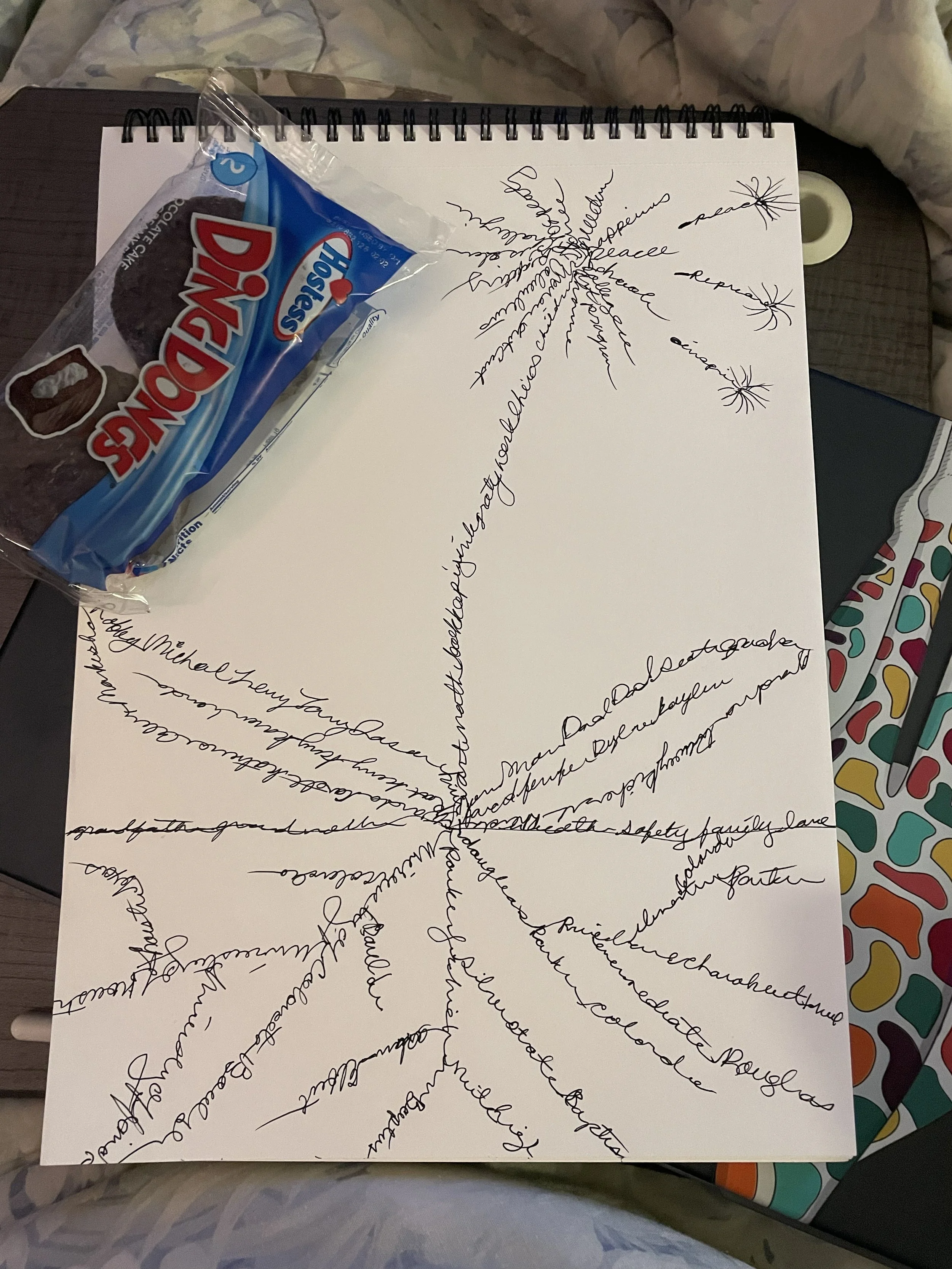
🌾 The Ground — Family Legacy

The soil is rich with the stories of those who came before me — grandparents, parents, and family whose love and lessons still nourish my life. Their strength and creativity form the ground I grow from.

🌱 The Roots — Where I Grew Up

My roots wind through Colorado’s soil and sunlight. The mountains, fields, and open skies taught me endurance, curiosity, and wonder. This is where my love of nature, art, and community first took hold.

🌿 The Leaves — My Family Today

The leaves represent the people who sustain me day to day — my husband, family, animals, and friends. They help me take in the light and breathe out gratitude. They are how I photosynthesize love into energy.

🌸 The Bloom — What Brings Me Joy Each Week

The bloom is the part of me that opens toward joy. It represents the moments that make me happiest — making art, helping others through Moxie, tending the garden, connecting with people, and seeing beauty in small things.

🍃 The Stem — My Skills and Strengths

The stem supports and connects everything. It represents my creativity, compassion, and ability to bring art to others as a form of care. Through it, inspiration travels between my roots and bloom — grounding and expression.

💨 The Seeds / Flyaways — What I Leave for Others

The seeds are the ideas, kindnesses, and creative sparks I hope to release into the world. Each one carries a message of compassion, imagination, and resilience — carried by the wind to plant new hope wherever it lands.


I then filled in each section with meaning — adding words that reflect how every part of the dandelion connects to my experiences and growth.

I then sketched my vision of the dandelion—its roots stretching into the earth, the ground steady beneath it, and its bloom reaching toward the light.


I then translated all the words from my list into a visual form, creating a dandelion sketch that represents how these ideas connect and grow together.

And then, of course, I celebrated the finished sketch with a Ding Dong. Because every good art session deserves chocolate.

🌼 Reflection: The Dandelion of Life

This piece became less about making an image and more about allowing meaning to emerge. As I worked, I realized that creativity often mirrors healing — neither happens in straight lines. Like a dandelion, growth can appear simple on the surface, but underneath it’s complex, resilient, and deeply rooted. I found myself letting go of perfection, trusting that each idea, each word, and even each mistake had a place. The process reminded me that everything we experience—joy, grief, curiosity, and rest—feeds the same soil. Art, for me, continues to be a way of integrating rather than dividing, of seeing beauty in wholeness. The Dandelion of Life is not about what I’ve created, but about recognizing that I am still growing, still blooming, still scattering seeds of myself into the world.

Creative Practice Blog 1: Pathways Through the Vine

Pathways Through the Vine

Every pathway in life is shaped by moments of growth, challenge, and change. For this Creative Practice Blog post, I chose to create an abstract artwork that represents my journey—my life line, my health, my creativity, and the ways that career, school, relationships, and faith intertwine to form who I am and where I am going.

How I Constructed the Image Series

This series of images was built step by step to reflect different aspects of my personal and professional journey. I began by choosing seven symbolic themes — Life, Health, Creativity, Career, School, Relationships, and Faith — each of which represents a tributary feeding into my pathway forward.

Conceptual Process

I started by creating AI images of my ideas:

  • A vine for life because it grows, twists, and persists.

  • A heartbeat rhythm for health because it sustains everything else.

  • Dandelion seeds for creativity because they are light, free, and full of possibility.

  • A path that breaks and restarts for career, to show transformation.

  • A small stream blossoming into flowers for school, to represent learning.

  • A second entwined vine for relationships, symbolizing support and connection.

  • A golden star for faith, serving as a guiding light.

🌿 Life Vine


The vine represents my life line — twisting, resilient, and always reaching upward. Its growth is not straight, but full of turns and curves, reflecting the winding journey that defines who I am. Interwoven within the vine is a heartbeat, a reminder that life itself is sustained by constant motion and vitality.

❤️ Health Line


The glowing red heartbeat rhythm symbolizes health, the foundation of all pathways. Its peaks and valleys reflect the moments of fragility and strength I have experienced. Health grounds me, reminding me that well-being is the pulse that sustains every other tributary in my life.

🌬️ Creativity: Dandelions & Breeze


Delicate dandelion seeds float through the air, representing creativity. Like seeds caught in a breeze, ideas drift unexpectedly, sometimes taking root in surprising places. Creativity is light, playful, and ever-present in my life, a constant source of renewal and inspiration.

💼 Career Path


My career began on a rigid and structured path, clear but confining. At a pivotal point, the path broke, creating a visible pause — a gap of uncertainty. From that moment, a new, freer, and more organic path emerged, curving with possibility. This shift represents the courage to step away from one direction and embrace transformation.

📚 School Path


The school path begins as something small and faint, almost tentative. Yet as it rises, it blossoms into brightness, producing glowing flowers that symbolize knowledge and growth. Education is not only about acquiring facts — it is about blossoming into possibility, expanding what feels possible for my future.

💞 Relationship Vine


A second vine, deeper in tone, twists together with the life vine, representing relationships. Where the two vines cross, blossoms bloom, showing the beauty of connection, support, and love. Relationships nourish and challenge me, making my path richer and more meaningful.

🌟 Faith


At the top of my pathway shines a radiant star, symbolizing faith. Its golden glow serves as a guiding light, offering hope, direction, and grounding. Faith illuminates all other pathways, reminding me that I do not walk them alone.

Visual Construction

Each image was generated digitally with a minimalist, abstract style on a black background, allowing the symbolic elements to stand out clearly. I worked one image at a time, layering meaning through:

  • Color choices (green for growth, red for vitality, gold for hope).

  • Organic textures (vines, blossoms, leaves) to emphasize life and resilience.

  • Light and glow effects to convey guidance, energy, and potential.

Narrative Integration

Once the individual images were created, I aligned them with the reflective writing in this blog post. Each graphic became a visual anchor for a specific theme, creating a visual-essay format where art and text reinforce one another. This construction process reflects my larger arts-in-health practice: blending creative expression with storytelling and meaning-making.

Process Reflection
Once I teased apart each section of my journey, I began shaping them into individual symbols: the vine for life, the heartbeat for health, dandelions for creativity, and so on. With each one clarified, I brought them together into a single collage of special moments, weaving the tributaries into a shared space. From there, I worked to connect the pieces visually, allowing the separate symbols to form a unified story. In the end, I painted the combined image, creating a layered work that represents not just isolated experiences but the ways they all intersect and support one another.

✨ Reflection

Together, these seven graphics form a visual map of my life — a journey sustained by health, guided by faith, intertwined with relationships, and nourished by creativity, school, and career. Each path bends, breaks, and blossoms in its own way, but all are connected to the vine of life. This creative practice allowed me to see my journey not as a straight line but as a living, breathing system of growth and connection.

In creating this image series, I found myself reflecting deeply on the ways art can serve as both process and product. By teasing out each theme—life, health, creativity, career, school, relationships, and faith—I created symbolic representations that connected personal growth with course concepts of arts-based research. Combining these elements into one collage allowed me to visualize how the tributaries of my life intertwine, overlap, and sustain one another, mirroring the integrative nature of arts in health practice. The act of constructing these images also became a form of self-care, giving me space to slow down, reflect, and externalize complex emotions in a way that felt healing. From a professional standpoint, this project expanded my artistic development by challenging me to think abstractly while remaining intentional about symbolism and meaning-making. It reinforced the importance of creating work that is both personally authentic and accessible to others as a tool for connection. Ultimately, the finished piece is more than an artwork—it is a visual map of my growth, reminding me how creative practice itself is a vital pathway to resilience.