The Photograph I Chose Not to Take
An Exploration of Ethics, Patient Dignity, and Art in Healthcare
When I began thinking about ethics in art and healing, my thoughts immediately turned to photographing patients. This is something I feel strongly about, both as someone who has experienced a lengthy hospitalization and as an Art Practitioner who now spends time with patients during some of their most vulnerable moments.
In healthcare, photographs are often used to document experiences, share inspiring stories, promote programs, or celebrate recovery. While these images may be taken with good intentions, I often wonder whether we truly consider how the patient might feel about them later. Just because someone agrees to be photographed in a particular moment, does that mean they will always be comfortable with that image being seen?
During my own hospitalization, there were days when simply sitting up, smiling, or feeling slightly better than the day before seemed like a tremendous accomplishment. I understand how someone could agree to a photograph during one of those moments. They might feel hopeful, grateful, or excited about their progress. But weeks, months, or even years later, that same photograph might represent a time they would rather not have displayed for the world to see.
I am not ashamed of what I experienced as a patient. Those experiences are part of my story. However, I do not want to be remembered only as the person lying in a hospital bed, struggling to survive. I want people to see me as I am today: healthy, strong, creative, and so much more than my medical history.
This personal perspective became the foundation of my exploration of ethics through art.
The First Idea: Blurring the Patient
My initial concept involved creating photographs of patients with their images blurred or obscured. My thought was that I could still communicate the experience of being present with someone during a difficult time while protecting their identity.
At first, this seemed like a reasonable solution. After all, if a patient's face could not be recognized, perhaps their privacy would be protected.
However, as I continued thinking about this approach, I began questioning whether blurring someone's identity was enough. Even without a recognizable face, the patient's body, surroundings, medical equipment, or circumstances might reveal something personal. More importantly, the photograph would still capture someone during a moment of vulnerability.
I began asking myself whether protecting someone's identity was the same as protecting their dignity. I realized that the two are not necessarily interchangeable.
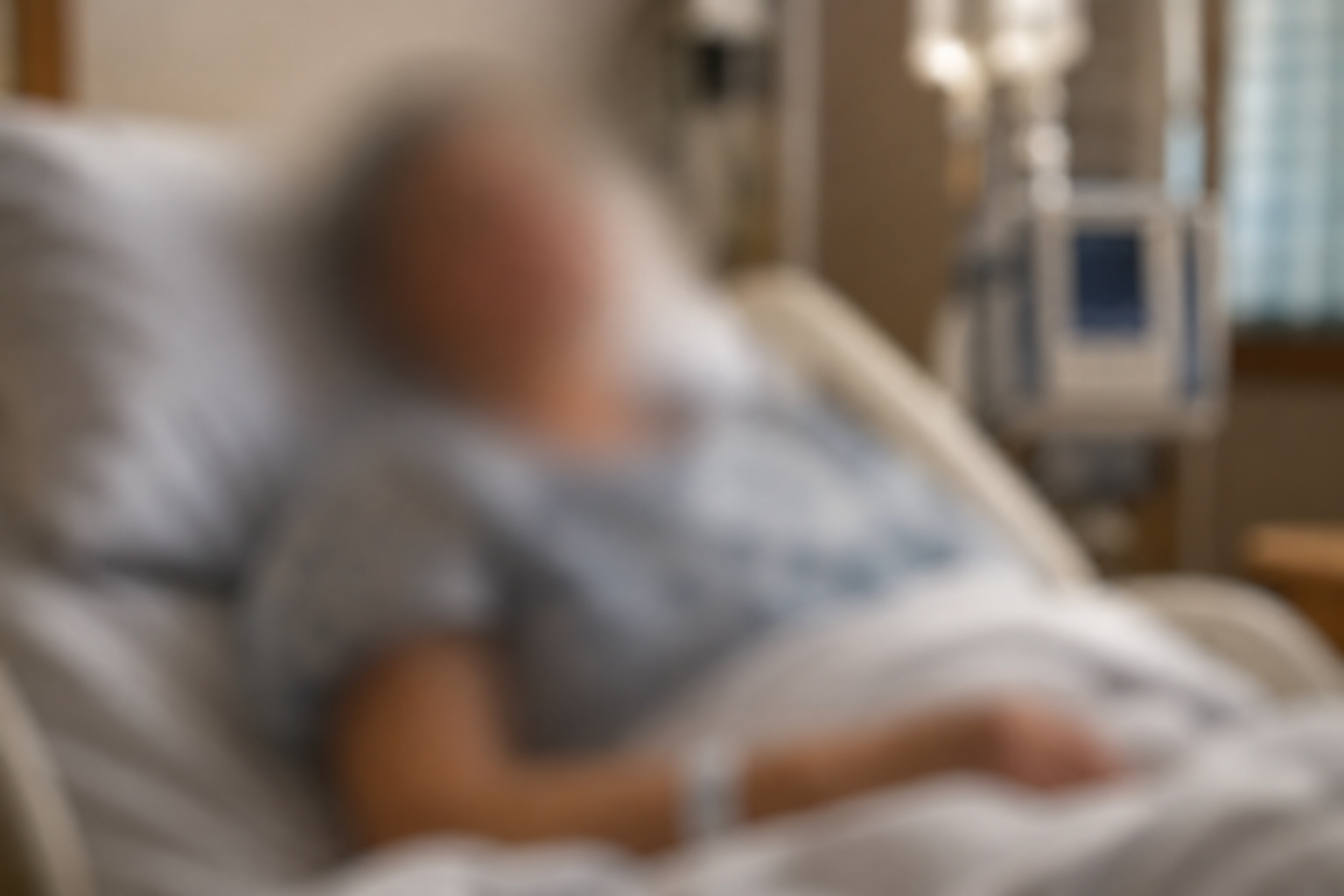
[Progression Image 1: Concept exploring a blurred or obscured patient photograph]
The Second Idea: Putting Myself in the Photograph
My next idea was to remove the patient from the photograph entirely and instead take pictures of myself while sitting with patients. I imagined something similar to taking selfies during these interactions, with the titles identifying the circumstances surrounding the patients I was visiting.
I thought this approach might allow me to acknowledge the experiences without showing the individuals themselves.
But as I explored the idea, another ethical concern emerged. If I placed myself in the photograph while referencing someone else's illness, trauma, or recovery, whose story would I actually be telling?
Would I be documenting a meaningful encounter, or would I be turning another person's vulnerable experience into something centered around me?
As an Art Practitioner, I am invited into moments that are deeply personal. Patients allow me to share a small part of their experiences, but that does not make their stories mine to claim or display.
I began to recognize that even when a patient is physically absent from a photograph, their circumstances can still be used to give that photograph meaning. Removing the patient from the image did not necessarily remove the ethical dilemma.
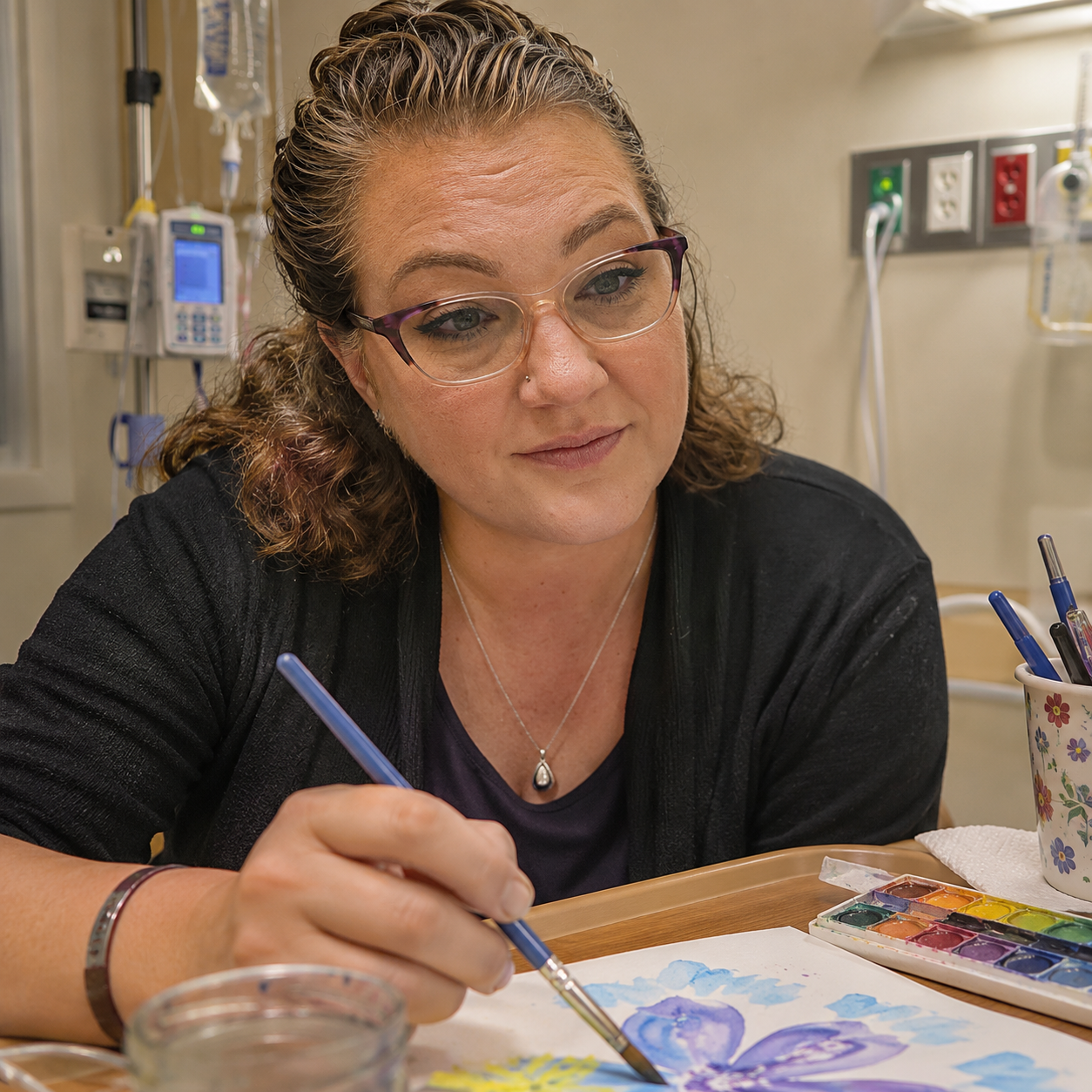
[Progression Image 2: Self-portrait concept representing time spent with a patient without showing the patient]
The Third Idea: Blacking Out the Image
From there, I began considering completely black canvases. I imagined a series of photographs that had been entirely blacked out, leaving nothing visible to the viewer.
This seemed like a stronger way to protect the individuals. The viewer would know that something had been photographed, but they would have no access to the image itself.
The black surfaces could represent privacy, protection, and the deliberate withholding of information.
Yet something about this concept continued to bother me.
A blacked-out image still suggests that a photograph was taken. Even if the image is concealed, the moment has already been captured. The decision about whether that moment should exist as a photograph has already been made.
I started thinking about the difference between taking a photograph and deciding not to share it versus choosing not to take the photograph at all.
This became an important turning point in my creative process. I realized that I was still trying to find ways to make an image acceptable rather than questioning whether the image needed to exist.
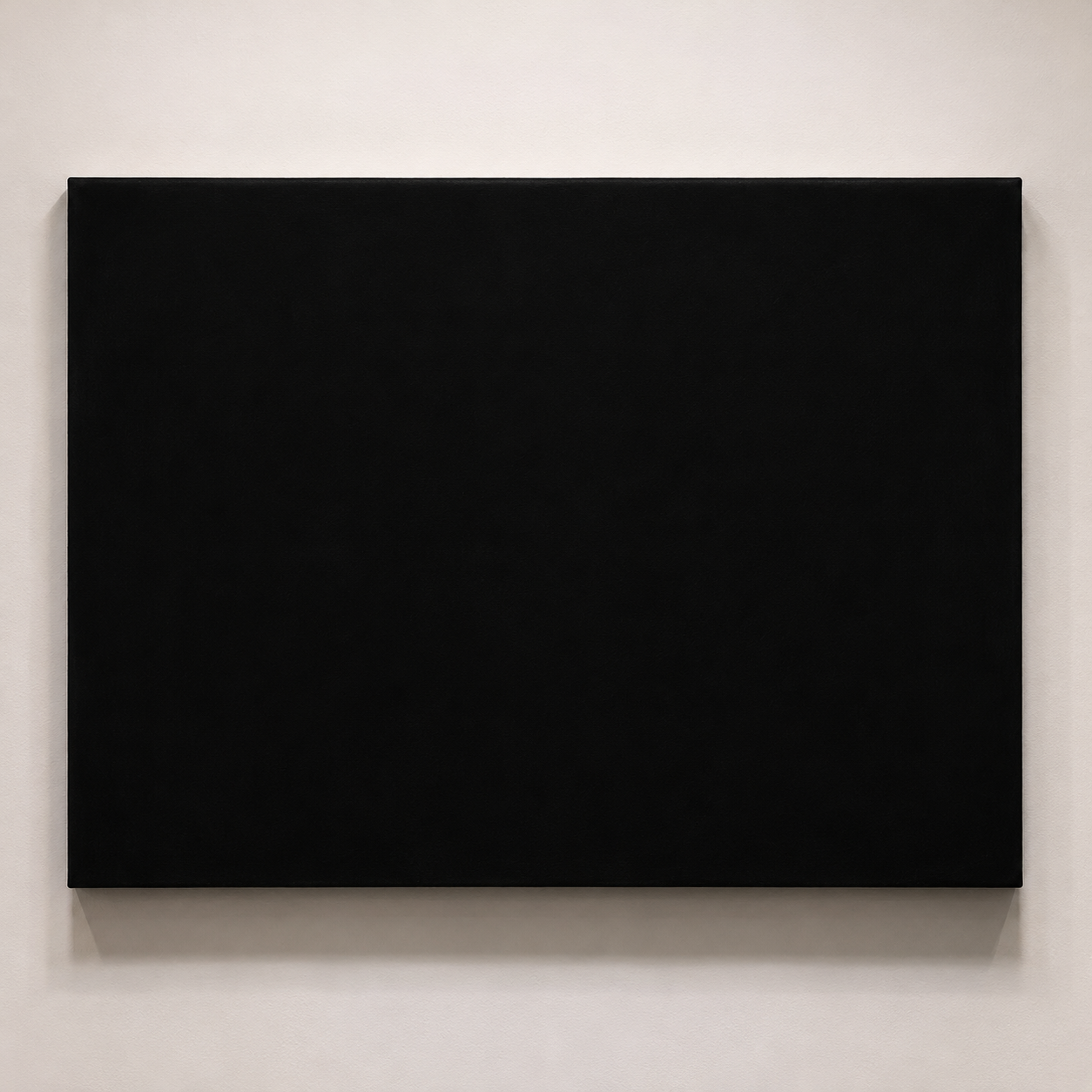
[Progression Image 3: Black canvas representing a photograph that has been completely concealed]
The Final Idea: The Empty Frames
Eventually, I arrived at the idea of five empty picture frames hanging on a wall.
Each frame would have a small title describing a different patient experience:
Cancer Patient, 3 Months Into Chemotherapy
Sepsis Patient, 1 Week After Waking Up
Trauma Survivor, 2 Days After ICU Transfer
Post-Surgical Patient, Learning to Walk Again
Chronic Illness Patient, During a Pain Flare
There would be no photographs inside the frames. No blurred faces, no carefully cropped images, and no blacked-out canvases.
The frames would simply be empty because the photographs were never taken.
For me, this became the most meaningful solution.
Each title encourages viewers to imagine the circumstances of the person who might have appeared in that frame. Perhaps they are exhausted, frightened, in pain, or celebrating a small victory in their recovery. The viewer can imagine these experiences, but they are not given access to the person's actual image.
The absence becomes intentional.
Rather than displaying someone during one of the most vulnerable moments of their life, I am choosing to acknowledge that experience without exposing the individual.
I also find it interesting that an empty picture frame creates an expectation. When we see a frame on a wall, we naturally expect something to be inside it. By leaving the space empty, I am interrupting that expectation and asking viewers to think about why they believe they should be able to see something there.
The work is no longer about finding a way to photograph patients ethically. It is about recognizing that sometimes the most respectful decision is not to take the photograph in the first place.
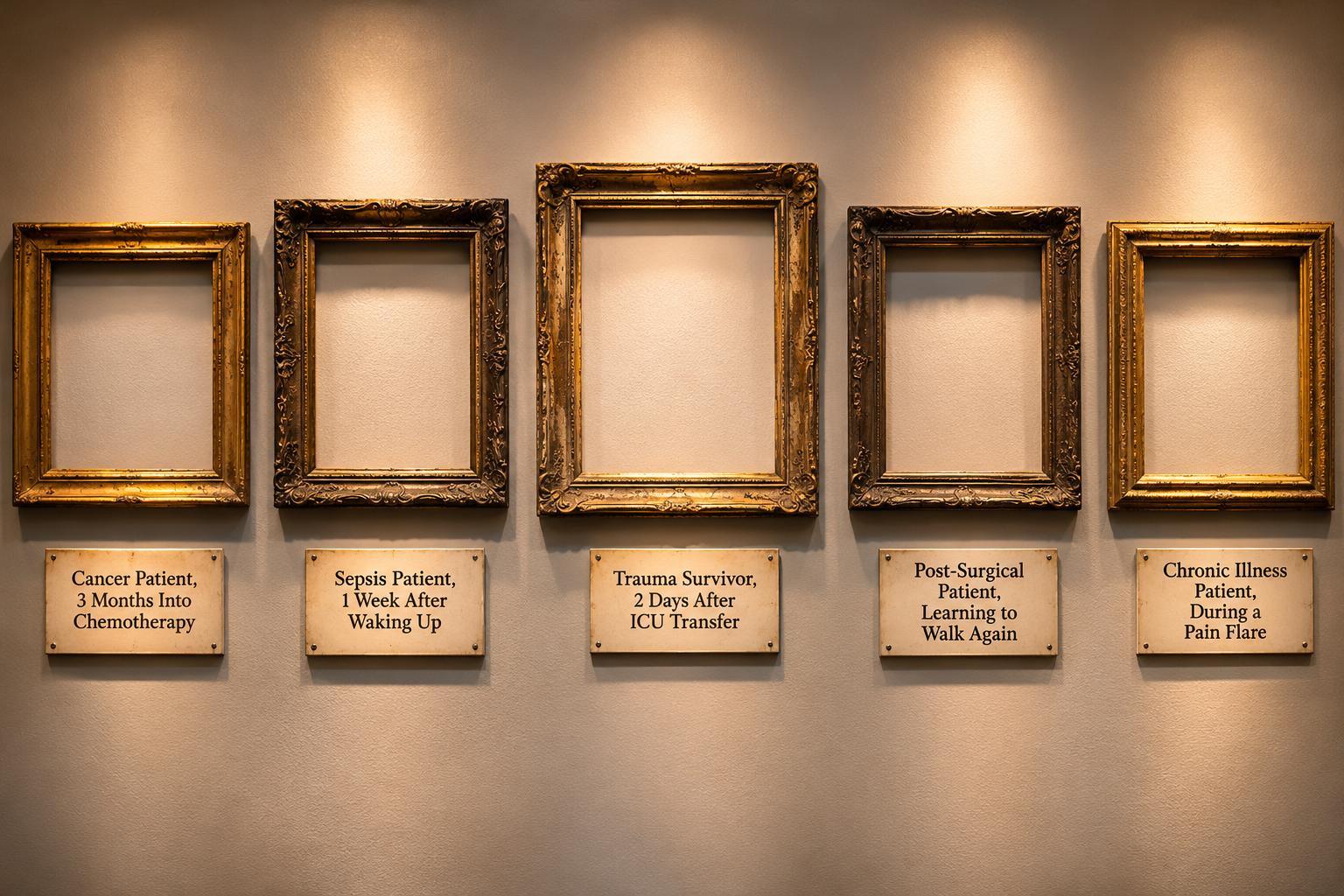
[Progression Image 4: Final concept showing five empty frames with titles identifying different patient experiences]
If I Were to Take This Further: The Gallery Experience
If I were to expand this project beyond the initial artwork, I would love to create a gallery installation using either empty picture frames or mirrors.
The empty frames would continue to represent photographs that were never taken. Visitors would walk along the gallery wall reading the titles beneath each frame, imagining the experiences of the patients who might otherwise have been displayed.
The empty space would leave the viewer's mind focused on the image that does not exist. It would encourage reflection about dignity, vulnerability, and the boundaries of what we choose to document.
However, I think replacing the empty frames with mirrors could create an entirely different and perhaps more confronting experience.
Imagine walking through a gallery and approaching a frame labeled "Cancer Patient, 3 Months Into Chemotherapy." Instead of seeing a photograph of someone else, you see yourself.
Suddenly, you are the person in the frame.
You move to the next mirror, labeled "Sepsis Patient, 1 Week After Waking Up," and once again, you see your own reflection.
The viewer is no longer simply imagining someone else's experience. They are being asked to put themselves in that person's place.
Would they want their photograph hanging on that wall? Would they want strangers looking at them during an incredibly difficult moment? Would they feel comfortable knowing that their experience had become something for other people to observe, discuss, or interpret?
And perhaps most importantly, would they still feel the same way about photographing patients if they were the patient being photographed?
I find this idea compelling because it changes the viewer's role. With the empty frames, the audience is asked to consider the person whose photograph was never taken. With the mirrors, the audience becomes the person who might have been photographed.
The experience moves from observation to personal confrontation.
I could even imagine combining the two approaches in one installation. Visitors might first encounter a series of empty frames before reaching a final frame containing a mirror. That final frame could be titled "You, On the Day You Never Wanted Anyone to Remember."
I think this could create a meaningful moment of reflection. We often view photographs of patients from a comfortable distance, knowing that the illness or trauma belongs to someone else. A mirror removes that distance and asks us to consider how we would feel if our own vulnerability were placed on display.
The empty frames and mirrors would communicate the same ethical concern through two different experiences. The empty frame asks viewers to consider the photograph that was never taken. The mirror asks whether they would want that photograph taken of themselves.
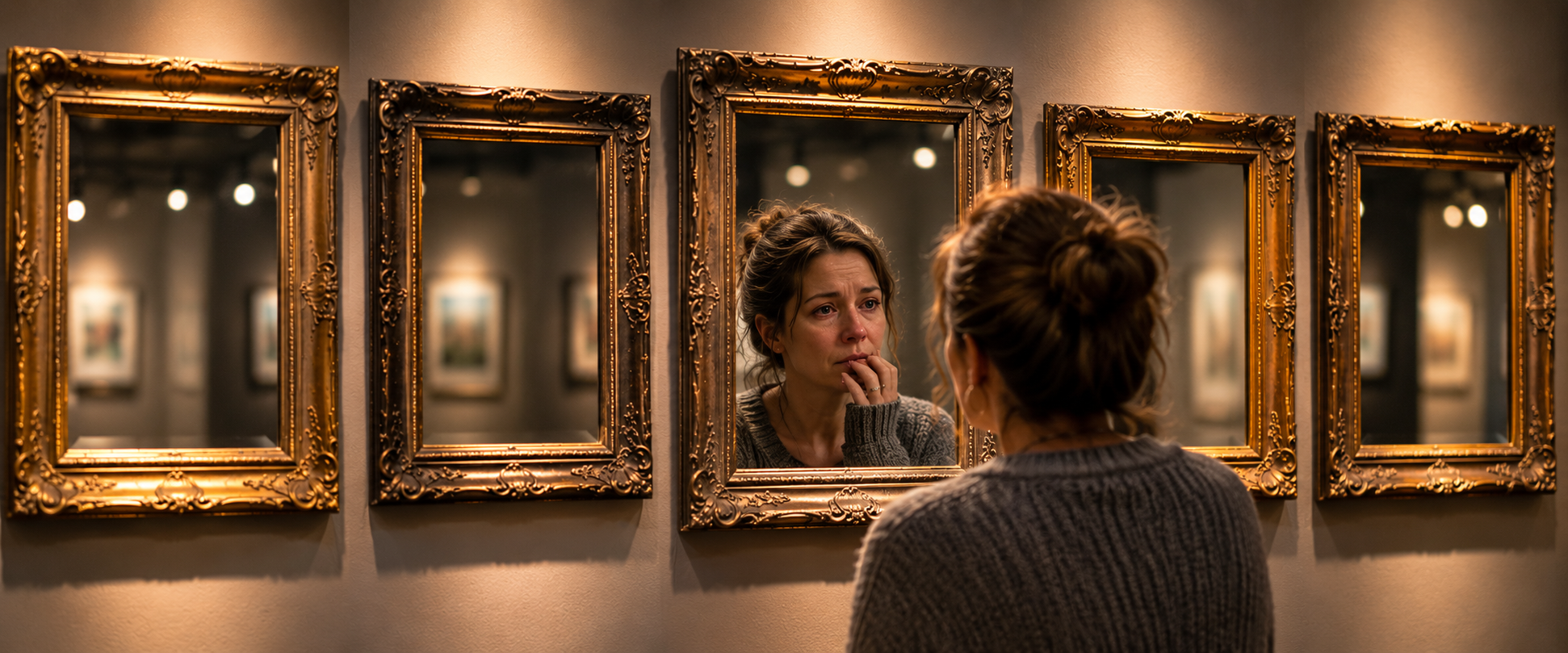
AI generated. This is an rendering of a concept.
Final Reflection: Ethics Beyond Consent
As I look back at the progression of this project, I find it interesting how much my thinking changed. I began by trying to find a way to photograph patients without revealing their identities. I moved through ideas that obscured, redirected, and concealed the image. Eventually, I realized that the most meaningful artistic decision was to eliminate the photograph entirely.
The process made me consider the difference between what we are permitted to do and what we should choose to do.
I recognize that patients have the right to make decisions about their own images. Meaningful, informed consent is essential, and some individuals may genuinely want to share their photographs as part of their healing or advocacy. My concern is not that every patient photograph is automatically unethical. It is that consent should not be treated as the end of our ethical responsibility.
As healthcare professionals, artists, and caregivers, we must think beyond the immediate moment. We should consider whether the image is necessary, who benefits from it, how it may be used, and how the person might feel about it in the future.
My own experiences have made me particularly sensitive to this issue. I know what it feels like to be incredibly vulnerable and to celebrate small moments of improvement. I also know how differently those moments can feel when viewed from the perspective of recovery.
When I spend time with patients, I recognize that I have been invited into a part of their lives that may be difficult, frightening, or deeply personal. I consider that invitation a privilege, and I believe it comes with a responsibility to protect their dignity.
This project has reinforced my belief that art does not always need to reveal something to communicate something meaningful. Sometimes absence, restraint, and the decision not to show an image can create a stronger statement than the image itself.
The empty frames are not empty because there is no story to tell. They are empty because the person who lived that story deserves to decide how, when, and whether it is seen.
Sometimes the most ethical image is the one we choose not to take.
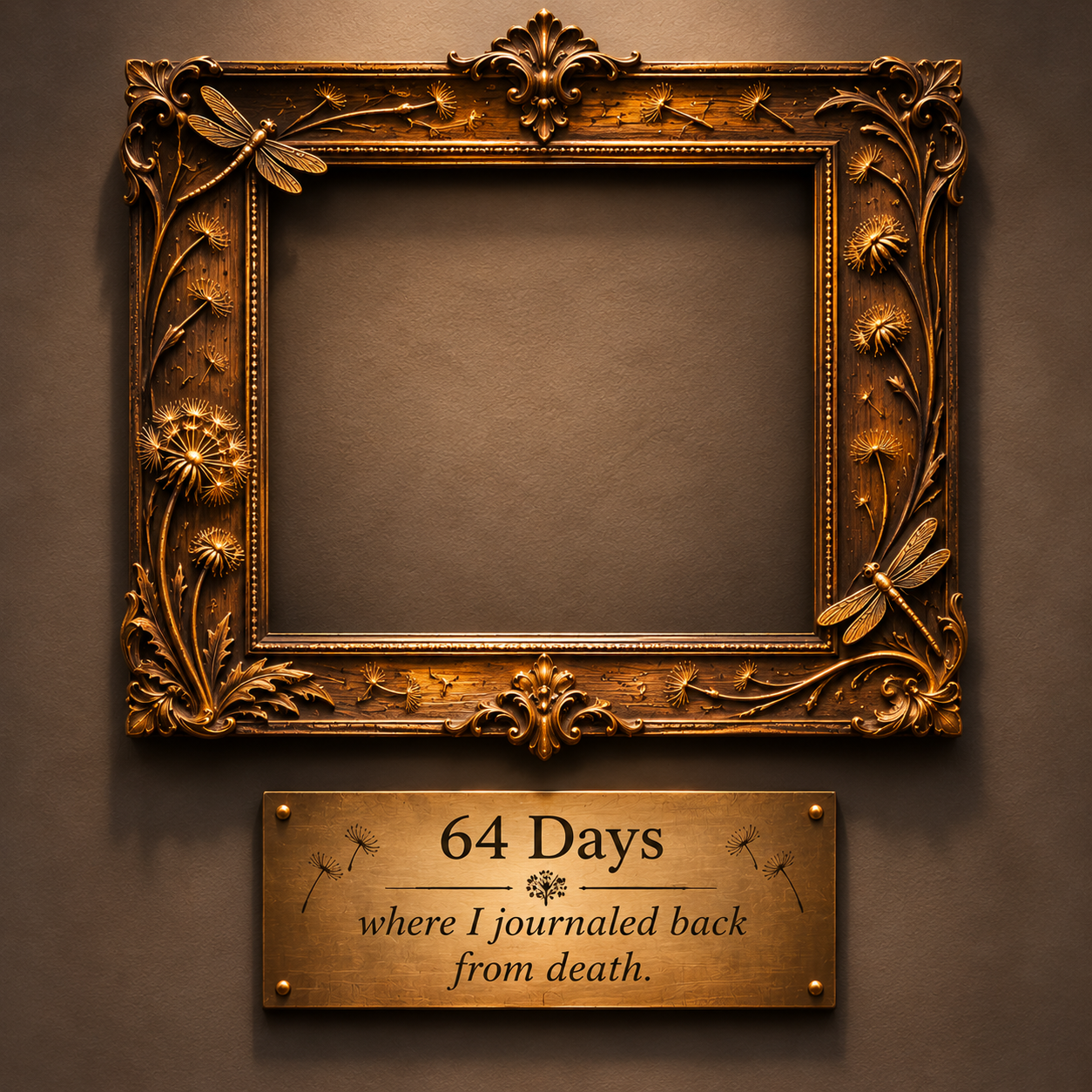
Example of frame that representative of my story. Dragonflies and Dandelions represent my journey and how I worked everyday to leave the hospital.
-The frame becomes the portrait of the patient. The imagery carved into the wood shows the patients self portrait.